
Divide and Conquer
If a problem is large, divide the problem into subproblems, solve them, then recombine the solutions.
The subproblems should be the same type of problems. For example, if the main problem is sorting, then the subproblems are sorting.
Examples of Divide and Conquer Problems
Binary search
Finding Maximum and Minimum
Merge Sort
Quick Sort
Strassen’s Matrix Multiplication
Subtraction Recurrence Relation 1
Recursive function example
function test(n) {
  if (n > 0) {
    console.log(n);
    test(n - 1);
  }
}
How many times is this function called?
test(3) -> prints “3”
test(2) -> prints “2”
test(1) -> prints “1”
test(0) -> does not print, or call itself again, since n is not greater than 0
Does work (printing) 3 times, but calls itself 4 times, where it doesn’t print on the last time.
If printing is one unit of time, then this takes 3 units of time.
So if you pass n it will make n+1 calls, and print n times.
The time depends on the number of calls, so time complexity is .
How do we find the recurrence relation?
Deriving by substitution
Starting with , we substitute repeatedly to find a pattern.
In terms of : Substituting gives , so:
In terms of : Similarly, , so:
Generalizing to steps:
We know . Assuming (so ):
Subtraction Recurrence Relation 2
function test(n) {
  if (n > 0) {
    for (let i = 0; i < n; i++) {
      console.log(n);
    }
    test(n - 1);
  }
}
Recurrence relation is
For each iteration, it takes units of time, then calls itself -1.
Tree Method
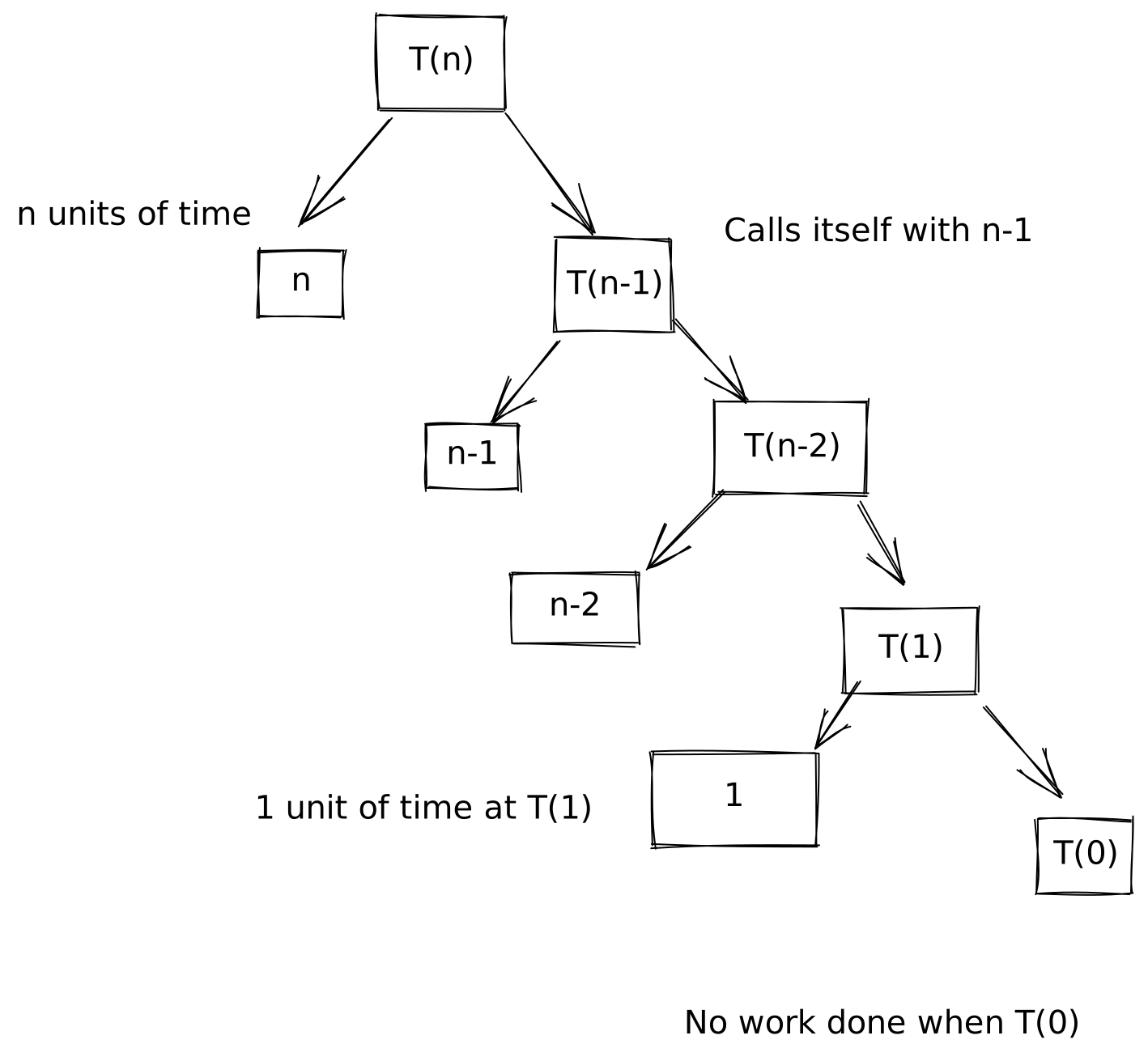
We can see the amount of work is
To find the total amount of work we can use the integer-sum-formula
This simplifies to for measuring time complexity.
Substitution Method
Starting with , we substitute repeatedly:
Continuing for iterations:
Assuming (so ):
Using the integer sum formula and :
Subtraction Recurrence Relation 3
function test(n) {
  if (n > 0) {
    for (let i = 1; i < n; i = i * 2) {
      console.log(n);
    }
    test(n - 1);
  }
}
We know (let i=1; i< n; i=i*2) will execute times.
Tree Method
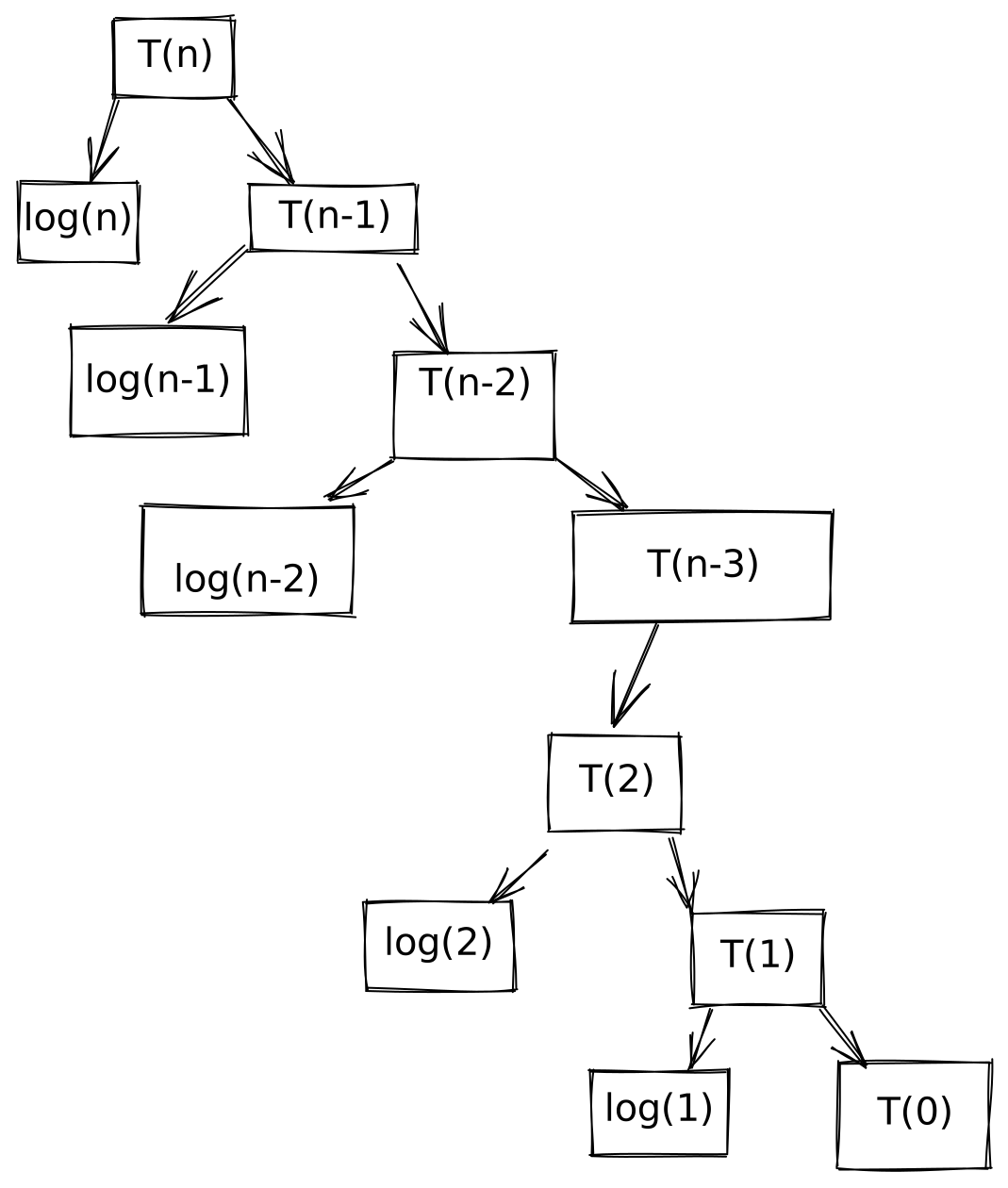
Amount of work is
-> log n factorial
Equivalent to
Substitution method
Plug in n-2
Assume , therefore
Simplifies to
Directly Get Answer
->
->
->
->
Just multiply the term after the + by n, since you know it will be repeated n times via recursion.
What if it’s not decreasing by 1? It still works.
-> ->
->
However, if there’s a coefficient on the function, it’s different though.
Subtraction Recurrence Relation 4
function test(n) {
  if (n > 0) {
    console.log(n);
    test(n - 1);
    test(n - 1);
  }
}
Tree Method
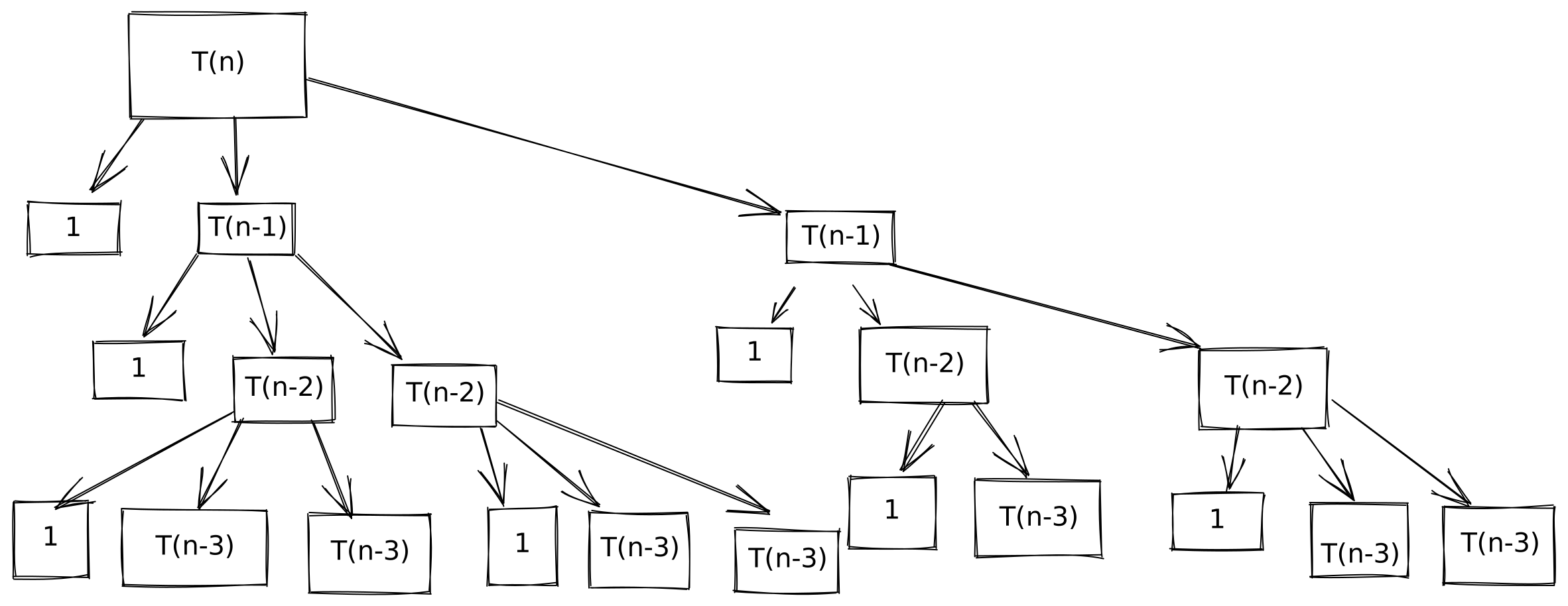
function called twice in first row
4 times in second row
8 times in third row
So the work done in each row is
In the series above, and
So we can use the formula above to find the answer for our tree
Simplifies to
Assume , so
So Big O is
Substitution Method
Assume
Master’s Theorem for Subtracting Functions
->
->
->
->
->
->
Master’s Theorem
General form of recurrence relation
Assume
where
Case 1
For example
Then
also can be thought of as
Case 2
For example
Then
Case 3
If you’re decreasing by more than 1, for example
Then
What if for example .5
Then or